

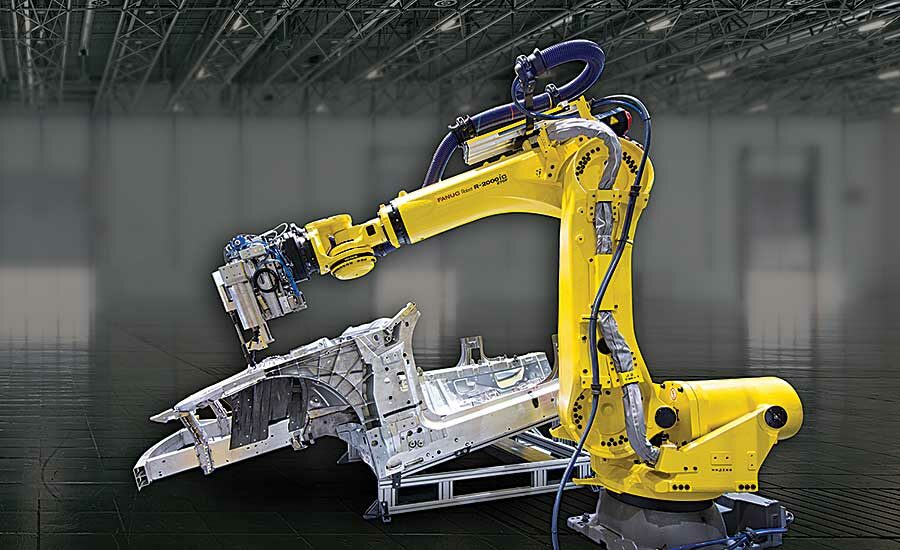
- INTRODUCTION
Robots are set to change the way metal tank (heavy gauge) manufacturing works. Innovations in tank production are driving improvements in efficiency, performance, and safety. Experts predict that the global industrial automation market, which includes robotics in manufacturing, will reach $200 billion by 2025. By 2030, it is estimated that robots will handle 25% of all manufacturing tasks. While automation might replace up to 20 million jobs worldwide by 2030, it will also create new opportunities in programming, maintenance, and robot supervision.
- THE IMPACT OF ROBOTICS ON METAL TANK (HEAVY GAUGE) MANUFACTURING
The use of robots in metal tank manufacturing can greatly increase efficiency and productivity. Automation can:
- Speed up production by up to 25%
- Reduce waste by as much as 20%
- Improve accuracy by 30%
Robots also make manufacturing more flexible. They can operate 24/7 without getting tired, and they can be quickly reprogrammed to meet changing production needs. This means industries can adjust more easily to market demands.
- SAFETY AND RELIABILITY IN ROBOT MANUFACTURING
One of the biggest advantages of using robots in metal tank manufacturing is improved safety and reliability. A study by Active8 Robots, a British automation company, found that workplace injuries decreased by up to 40% in places where robots were used. This is because robots take over dangerous tasks such as:
- Welding
- Cutting
- Handling heavy materials
Additionally, robots improve accuracy, reducing costly mistakes. Machine learning technology can also analyze large amounts of data to predict and prevent equipment failures, making the manufacturing process more reliable.
- CHALLENGES: CERTIFICATIONS AND INTEGRATION
Despite its benefits, using robots in manufacturing comes with challenges. One major issue is the certification process. Getting approval for robotic systems can be complex, expensive, and time-consuming. According to Semantic Scholar, robotics companies must go through more than 50 standard validation and regulatory checks. These checks must often be repeated whenever software is updated.
Another challenge is integrating robots with existing machines and processes. This requires technical expertise and significant investment. Companies must ensure that their robotic systems work well with their current equipment to avoid disruptions.
- KEY TAKEAWAYS
- Robotics offers great benefits in metal tank (heavy gauge) manufacturing, improving efficiency, flexibility, safety, and reliability.
- Automation can increase production speed by 25%, cut waste by 20%, and boost accuracy by 30%.
- Workplace safety improves, reducing injuries by up to 40%.
- Challenges include high certification costs and the need for expert knowledge in integration.
- CONCLUSION
Robots are transforming metal tank (heavy gauge) manufacturing by improving efficiency, safety, and flexibility. While automation may replace some jobs, it will also create new roles in programming, maintenance, and robotics management. However, challenges such as certification and integration must be addressed to make the transition smooth. As technology continues to evolve, companies that embrace robotics will be better positioned for success in the future.
