

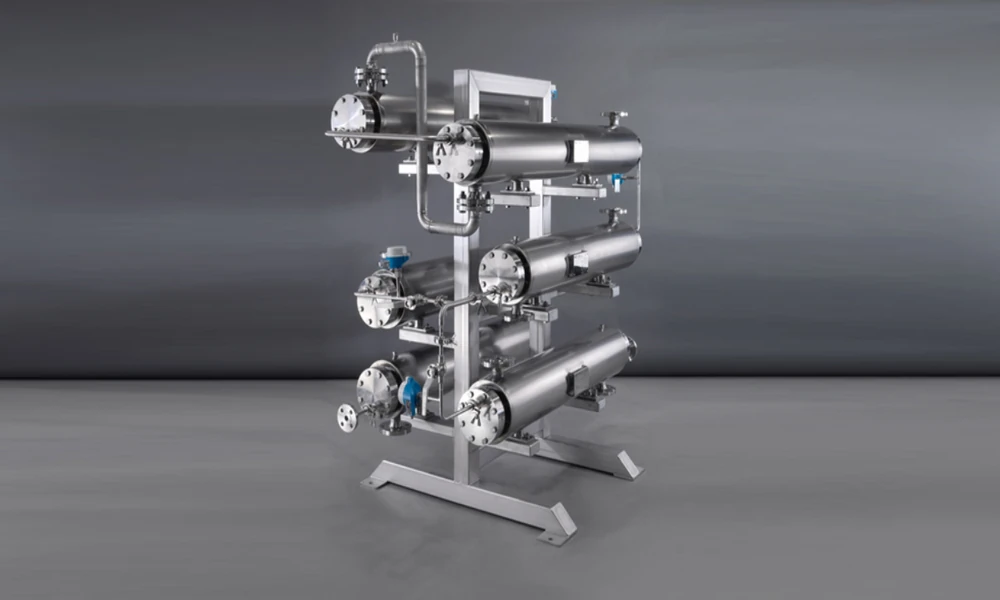
Chemical synthesis and pharmaceutical manufacturing have undergone a fundamental process shift in recent decades as continuous flow chemistry has moved from academic research to industrial production. Flow reactor design represents the engineering discipline that makes this shift operationally viable: the ability to conduct chemical reactions in a controlled, continuous stream rather than in discrete batch vessels, producing more consistent product quality, improved safety profiles, and greater production flexibility than traditional batch manufacturing allows. Understanding how continuous flow reactors are designed, what distinguishes the option from batch alternatives, and how continuous manufacturing principles apply across chemistry and pharmaceutical applications is essential for process engineers and procurement teams evaluating reactor technology.
What is a continuous flow reactor?
A continuous flow reactor is a reaction vessel or system through which reactants are continuously introduced and product is continuously withdrawn, in contrast to a batch reactor where reactants are loaded, the reaction proceeds to completion, and the product is discharged before the next batch begins. Continuous reactors operate at steady state: the residence time of the reacting material in the reactor determines the extent of reaction, and the continuous flow of material through the reactor means that product is generated without the charge-discharge cycle that limits batch throughput.
The engineering categories within continuous flow reactors include:
- Tubular reactors: the simplest continuous flow geometry, in which reactants are pumped through a tube or coil at a controlled flow rate and temperature. The residence time is determined by the tube volume and the volumetric flow rate. Tubular reactors are effective for fast reactions and reactions requiring precise temperature control along the reaction path
- Continuous stirred tank reactors (CSTRs): vessels with continuous inflow and outflow maintained at steady-state composition through agitation. CSTRs operate at the exit concentration throughout the reactor volume, which makes the option appropriate for reactions where the reaction rate is high and the conversion per pass need not be complete
- Microreactors and milli-reactors: miniaturised flow channels whose high surface-area-to-volume ratio enables extremely rapid heat and mass transfer, making the option particularly effective for highly exothermic reactions, reactions requiring short reaction times, and the generation of hazardous intermediates that are safer to produce in small quantities continuously than in large batch volumes
- Plug flow reactors (PFRs): tubular reactors in which the reaction mixture moves through the tube as a plug, with no axial mixing and a defined residence time distribution that allows precise control of conversion and selectivity
What are the advantages of flow chemistry reactors?
Flow chemistry reactors offer a set of performance advantages over batch reactors that have driven industrial adoption across pharmaceutical API synthesis, specialty chemical production, and process chemistry research:
- Enhanced heat and mass transfer: the high surface-area-to-volume ratio of continuous flow channels enables faster and more uniform heat removal from exothermic reactions, reducing hot-spot formation and the associated selectivity losses and safety risks that large-batch exothermic reactions present
- Precise residence time control: the flow rate and reactor volume determine the reaction time with a precision that batch timing cannot match, enabling better control of conversion, selectivity, and the formation of process-related impurities
- Safer handling of hazardous reagents: reactions involving toxic, explosive, or highly reactive intermediates are inherently safer in a flow format where the quantity of hazardous material present at any instant is the small volume within the reactor, not the full batch quantity
- Scalability without re-optimisation: scaling a continuous flow process from laboratory to production scale is achieved by increasing flow rate or running parallel reactor channels rather than by changing reactor geometry, which often requires re-optimisation of reaction conditions in batch processes
How does continuous manufacturing differ from batch production?
Continuous manufacturing is the integration of continuous flow processing into a production system where raw material entry, reaction, purification, and product formulation or isolation are linked in a single continuous train rather than a sequence of discrete batch operations. In pharmaceutical manufacturing, the FDA has actively encouraged the adoption of continuous manufacturing as a route to improved product quality, reduced manufacturing footprint, and faster response to supply chain disruptions.
The continuous manufacturing advantages that have driven pharmaceutical sector adoption include real-time process monitoring and control through process analytical technology (PAT), reduced intermediary storage and handling steps that introduce contamination risk, faster cycle time from raw material to final product, and the ability to rapidly adjust production rate by changing throughput rather than by adding or removing batch equipment.
What are pressure reactor vessels and how do they relate to flow chemistry?
Pressure reactor vessels are reaction systems designed to operate above atmospheric pressure, enabling reactions that require elevated temperature without solvent vaporisation, reactions that use gaseous reagents at elevated partial pressure, and reactions whose kinetics or selectivity are improved by pressure effects. In continuous flow chemistry, pressure control is achieved through back-pressure regulators that maintain the system pressure independent of flow rate, enabling flow reactions at temperatures well above the atmospheric boiling point of the solvent and pressures that would be impractical in large-batch pressure vessels.
Conclusion
Flow reactor design, continuous flow reactors, flow chemistry reactors, and continuous manufacturing represent the process engineering foundation of modern chemical and pharmaceutical production. The performance advantages of continuous processing over batch, in terms of heat and mass transfer, safety, scalability, and product quality consistency, have made continuous flow technology the preferred approach for new process development across the chemistry industry.
Specialist manufacturers provide a range of continuous flow reactors, flow chemistry reactors, laboratory and pilot-scale continuous reactor systems, and pressure reactor vessels for chemical, pharmaceutical, and process chemistry applications. These systems can be configured for different production requirements, from microreactors for hazardous chemistry to larger continuous manufacturing reactor trains used in pharmaceutical API production, with engineering considerations tailored to specific process needs.
