

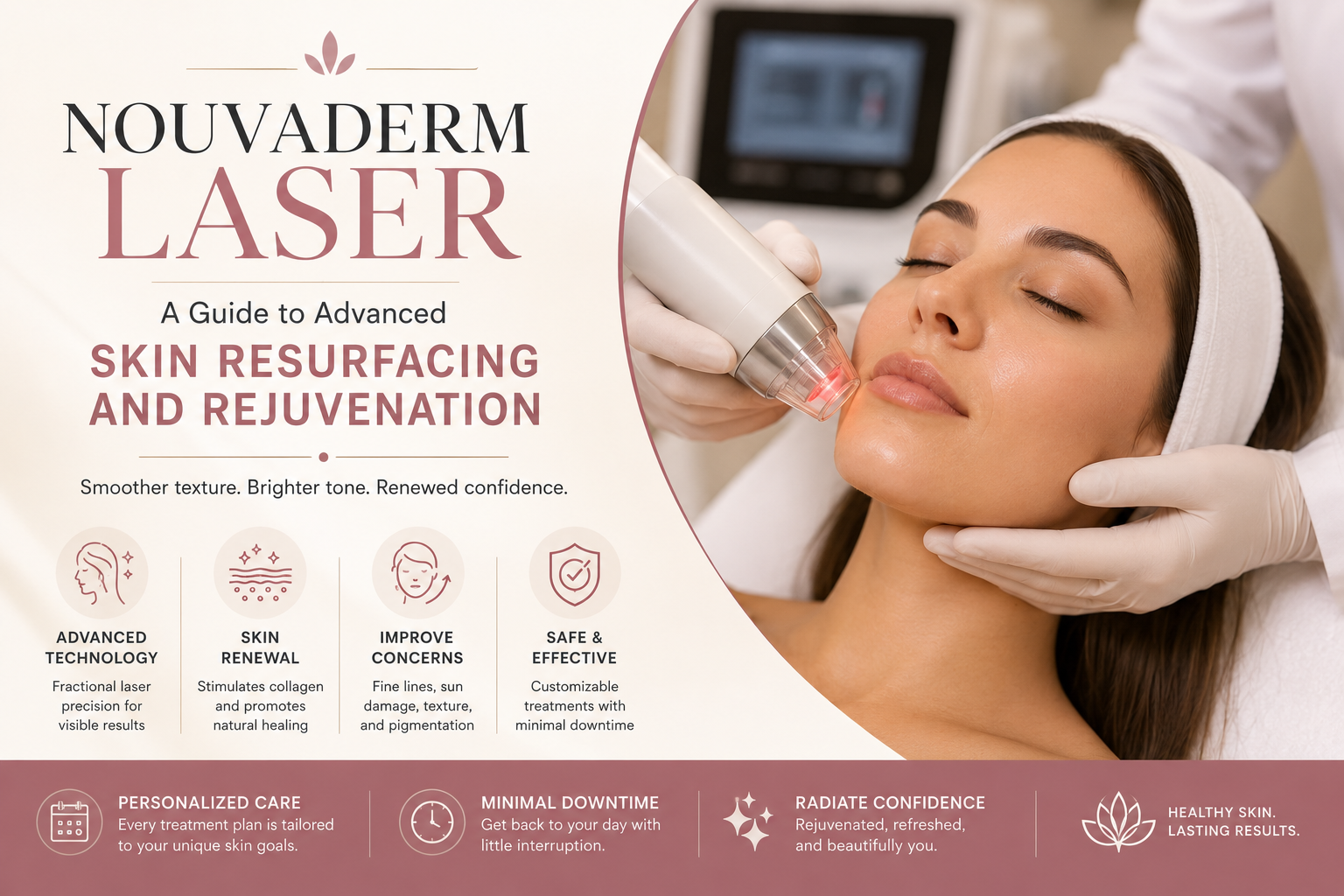
Skin naturally changes with time. Years of sun exposure, environmental stress, hormonal changes, acne, and the normal aging process can gradually leave the complexion looking less even than it once did. Fine lines may become more noticeable, pigmentation can develop, and areas of rough or irregular texture may begin to affect how smooth the skin looks and feels.
Daily skincare remains important, but topical products have limitations. People who want to address more noticeable concerns may eventually explore professional resurfacing procedures.
The Nouvaderm laser offers a fractional approach to skin rejuvenation designed to create controlled treatment zones while leaving surrounding areas available to support the recovery process. Instead of simply covering imperfections, resurfacing encourages natural renewal and collagen remodeling, potentially improving several aspects of skin quality over time.
Understanding how this technology works, what it may address, and what recovery involves can help patients have more informed conversations with their dermatology or aesthetic provider.
What Is Fractional Laser Resurfacing?
The word “fractional” describes the way energy is delivered to the skin.
Rather than treating the entire surface uniformly, fractional technology creates microscopic treatment zones while leaving areas of surrounding tissue untreated. These untreated areas can help support the skin’s healing response.
The controlled treatment stimulates natural renewal processes. As the skin heals, old or damaged cells are replaced and collagen remodeling may occur.
This approach allows providers to adjust treatment intensity according to individual concerns and goals.
However, fractional resurfacing is not one standardized experience. Treatment depth, settings, number of sessions, and recovery can vary considerably depending on the technology used and the individual being treated.
Why Collagen Matters for Skin Quality
Collagen is a structural protein that helps skin maintain firmness and resilience.
When we are younger, the skin naturally produces substantial amounts of collagen. Production gradually declines with age, while ultraviolet exposure and other environmental factors can accelerate its breakdown.
This loss can contribute to:
- Fine lines
- Wrinkles
- Reduced firmness
- Uneven texture
- More noticeable pores
- Changes in overall skin quality
Resurfacing treatments that stimulate a controlled healing response can encourage collagen remodeling.
Importantly, collagen changes take time. Improvements associated with remodeling generally develop gradually rather than appearing immediately after a procedure.
Addressing Uneven Skin Texture
Texture is one of the most common reasons people consider resurfacing.
Skin may feel rough or appear uneven because of aging, sun exposure, previous acne, enlarged-looking pores, or other factors.
Cosmetics can sometimes make irregular texture more obvious rather than concealing it, particularly when foundation settles into fine lines or uneven areas.
Fractional resurfacing aims to improve the skin’s surface while supporting renewal beneath it.
Results vary between individuals, and deeper scars or more significant texture irregularities may require a series of treatments or a different combination of procedures.
A professional evaluation can help establish what level of improvement is realistic.
Understanding Pigmentation Concerns
Pigmentation is another common reason people explore laser treatments, but not all dark spots are the same.
Discoloration may result from:
- Sun exposure
- Freckles
- Age-related spots
- Post-inflammatory pigmentation
- Hormonal influences
- Previous acne or irritation
Determining the cause matters because different forms of pigmentation may respond differently to treatment.
A professional should evaluate questionable or changing lesions before they are treated cosmetically. A spot should not simply be assumed to be harmless pigmentation when there is uncertainty about its nature.
This is especially important for people with extensive histories of sun exposure.
How Sun Damage Changes the Appearance of Skin
Ultraviolet radiation has a cumulative effect on the skin.
Years of exposure can contribute to uneven pigmentation, fine lines, roughness, loss of elasticity, and other visible signs of photoaging.
Arizona residents may be especially conscious of these effects because sunshine is a significant part of everyday life throughout much of the year.
Professional resurfacing can address certain visible signs of photodamage, but it does not make the skin immune to future ultraviolet exposure.
Daily sun protection remains essential both before and after cosmetic treatment.
Improving the Appearance of Fine Lines
Fine lines develop for multiple reasons.
Collagen loss, repetitive movement, dehydration, genetics, and environmental exposure can all contribute.
Resurfacing is generally aimed at improving skin quality and may soften certain fine lines as renewal and collagen remodeling take place.
However, different types of wrinkles may require different approaches.
Expression lines caused primarily by muscle movement, for example, are different from lines related to surface texture or collagen loss. A personalized consultation can determine which treatment category best matches the concern.
What Happens During a Consultation?
A professional consultation should occur before treatment.
The provider may evaluate your skin, discuss your goals, review relevant medical information, and determine whether resurfacing is suitable.
Topics may include:
- Current skincare products
- Previous cosmetic procedures
- Medications
- History of pigmentation changes
- Tendency to scar
- Recent sun exposure
- Treatment goals
- Expected downtime
This conversation is also the right time to discuss what results are realistic.
Patients should feel comfortable asking why a specific treatment is being recommended and whether alternatives are available.
Customizing Treatment Depth
One advantage of fractional resurfacing is that treatment parameters can potentially be adjusted according to individual goals.
A person interested in subtle refreshment may have different needs from someone trying to improve more noticeable texture or photodamage.
Generally, more intensive treatments may involve greater recovery, while gentler approaches may require multiple sessions to reach a desired outcome.
The appropriate balance depends on the individual.
Treatment intensity should therefore be determined by a qualified professional rather than chosen simply according to how quickly someone wants results.
What Does Treatment Feel Like?
Patient experiences vary depending on treatment settings, the area being treated, and individual sensitivity.
Providers may use comfort measures before or during the procedure. Patients can experience sensations such as warmth, tingling, or prickling as energy is delivered.
Treatment duration varies based on the size and number of areas being addressed.
Before beginning, the provider should explain what sensations are expected and what would be considered unusual.
Knowing what to anticipate often makes the treatment experience more comfortable.
Understanding the Recovery Period
Recovery is an important part of resurfacing and should be considered when scheduling treatment.
Depending on treatment intensity, patients may experience temporary redness, warmth, sensitivity, dryness, or swelling. As renewal progresses, the skin may also develop a rough or flaky appearance.
The exact recovery timeline varies.
Patients should follow their provider’s individualized instructions rather than assuming their experience will be identical to someone else’s.
It may be sensible to avoid scheduling treatment immediately before an important social or professional occasion unless the expected recovery period has been clearly discussed.
Why You Should Not Pick or Scrub Healing Skin
It can be tempting to exfoliate skin when it begins feeling rough after resurfacing.
Aggressive scrubbing or picking may interfere with normal healing and increase irritation.
Unless specifically instructed otherwise, patients are generally better served by treating recovering skin gently and allowing natural shedding to occur.
A simple skincare routine may temporarily replace more aggressive products.
Following the provider’s aftercare instructions is particularly important because recommendations can differ according to treatment depth and individual skin characteristics.
Sun Protection Becomes Even More Important
Freshly treated skin requires careful protection from ultraviolet exposure.
Sun exposure can contribute to irritation and unwanted pigmentation during the recovery process. It can also contribute to the same photodamage the treatment was intended to improve.
Patients should follow their provider’s instructions regarding sunscreen and sun avoidance.
Long term, consistent broad-spectrum sun protection helps preserve improvements and reduces additional cumulative damage.
Protective clothing, hats, and shade can complement sunscreen when spending time outdoors.
Be Careful With Active Skincare Ingredients
Many popular skincare routines include ingredients such as retinoids, exfoliating acids, or other active products.
These may not be appropriate immediately before or after resurfacing.
A provider may recommend temporarily discontinuing certain ingredients to minimize unnecessary irritation.
Patients should disclose the products they use during consultation, including prescription creams and over-the-counter treatments.
Once the skin has recovered sufficiently, the provider can advise when active products can be restarted.
When Might Results Become Visible?
Skin resurfacing is a process rather than an instant transformation.
Some changes may become noticeable as the initial recovery period resolves, while improvements related to collagen remodeling can continue developing over a longer period.
The timeline depends on treatment intensity, skin characteristics, and the concerns being addressed.
Some patients may pursue a series of treatments, while others may use resurfacing periodically as part of a broader skincare plan.
It is important to evaluate results according to the expected treatment timeline rather than judging the outcome too early.
Who May Be a Candidate?
People interested in fractional resurfacing commonly want to improve concerns such as uneven texture, fine lines, sun-related discoloration, or general signs of photoaging.
However, candidacy cannot be determined from a list of concerns alone.
Skin tone, medical history, medications, active skin conditions, sun exposure, and other individual factors can influence suitability.
Certain circumstances may require delaying treatment or considering alternatives.
A qualified provider can evaluate these factors and explain whether resurfacing is appropriate.
Why Professional Evaluation Matters
Cosmetic technology has become increasingly accessible, but laser procedures still require careful patient selection and treatment planning.
Professional evaluation helps ensure that the concern being treated is appropriate for the technology.
It also provides an opportunity to identify issues that may require medical attention rather than cosmetic treatment.
Patients should be cautious of promises that one procedure can solve every skin concern.
A responsible approach identifies the actual problem first and selects the treatment second.
Combining Resurfacing With a Broader Skincare Plan
Laser treatment is not a replacement for everyday skin care.
Professional procedures generally work best when supported by consistent habits.
A long-term plan may include:
- Gentle cleansing
- Appropriate moisturization
- Daily sun protection
- Targeted products recommended for individual concerns
- Periodic professional evaluations
- Maintenance treatments when appropriate
Other in-office procedures may also be considered depending on the patient’s goals.
The key is coordination. Combining treatments without a thoughtful plan can unnecessarily irritate the skin or complicate recovery.
How to Prepare for an Appointment
Before a resurfacing consultation, consider identifying your main concerns.
Instead of saying, “I want a laser,” describe what you actually want to improve.
For example:
“My skin texture feels rough.”
“I have developed more visible sunspots.”
“I would like to soften fine lines.”
This gives the provider an opportunity to determine whether resurfacing is actually the most appropriate solution.
You should also provide accurate information about medications, previous procedures, skincare products, and relevant health conditions.
Setting Realistic Goals
Cosmetic treatment should be approached as improvement rather than perfection.
Natural skin has texture, pores, variations in tone, and lines. The objective is not necessarily to erase every visible characteristic.
Realistic goals might include smoother-looking texture, a more even appearance, reduced visibility of certain spots, or a refreshed overall complexion.
The best treatment plan is one that matches those goals while respecting skin health and acceptable recovery time.
Considering Nouvaderm as Part of a Personalized Plan
For appropriate candidates, the Nouvaderm laser may be considered as part of a customized rejuvenation strategy focused on fractional resurfacing and natural skin renewal. Its role should be determined by the specific concern, individual skin characteristics, desired degree of improvement, and willingness to accommodate the expected recovery process.
Rather than selecting treatment based only on popularity, patients benefit from understanding what the technology is intended to accomplish and how it fits within their broader skincare goals.
That informed approach makes expectations clearer and helps patients participate actively in treatment decisions.
Questions to Ask Before Treatment
A consultation is an opportunity to gather information.
Useful questions may include:
- Is this procedure appropriate for my skin?
- What concerns is it most likely to improve?
- What will treatment feel like?
- What downtime should I realistically expect?
- Are there potential side effects?
- How should I prepare beforehand?
- Which products should I avoid?
- When can I return to my normal skincare routine?
- How many sessions might be recommended?
- What maintenance may be needed?
Clear answers make it easier to plan treatment around work, social commitments, and personal expectations.
A Thoughtful Path Toward Skin Rejuvenation
Fractional resurfacing represents an important development in modern aesthetic skin care because it allows professionals to create controlled treatment zones while supporting the body’s natural renewal processes.
For appropriate patients, resurfacing may help improve concerns such as uneven texture, fine lines, pigmentation, and visible sun damage. Collagen remodeling can also contribute to gradual changes in overall skin quality.
However, technology is only one part of achieving a satisfying outcome.
Professional evaluation, appropriate treatment settings, realistic expectations, careful aftercare, and consistent sun protection all matter. Patients should understand what they are treating, why a particular procedure has been recommended, and what recovery is likely to involve.
The goal of skin rejuvenation does not need to be dramatic transformation. For many people, it is simply about helping their complexion look smoother, brighter, more even, and refreshed while maintaining a natural appearance.
With an individualized plan and responsible aftercare, fractional resurfacing can become one component of a long-term approach to healthier-looking skin.
