

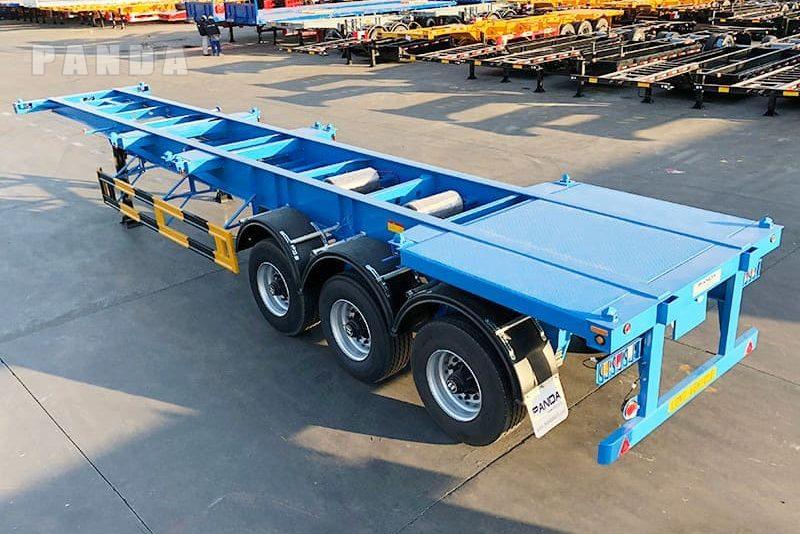
Efficient port and road transport depends on the compatibility between containers and their supporting chassis. The container chassis dimensions directly influence handling, loading, and safety during transit. Ports operate under strict spatial constraints, where the wrong chassis size can lead to delays or underutilized space. A chassis that is too long or too short may misalign with container locking points, slowing down the loading and unloading processes.
Chassis Dimensions and Port Operations
At ports, containers are often stacked and moved using cranes that rely on standard measurements. If a chassis does not match the container’s length or height specifications, it can hinder crane alignment, reducing throughput.
Additionally, oversized chassis may block access lanes, restricting other equipment and creating bottlenecks. Correctly sized chassis allow for seamless integration with automated stacking systems, enabling smoother container transfers. This alignment ensures the efficient flow of cargo from vessel to terminal.
Road Transport Considerations
On highways, chassis dimensions affect maneuverability, weight distribution, and safety. A chassis that exceeds legal length limits can face penalties or require special permits, slowing transport schedules.
Conversely, a chassis that is too short may create stability issues, especially when carrying taller containers. A properly proportioned chassis distributes the container’s weight evenly across axles, reducing tire wear and improving fuel efficiency. Drivers experience more controlled handling, lowering the risk of accidents.
Intermodal Connectivity
Chassis dimensions also determine how easily containers move between ports, rail yards, and trucking routes. Standardized lengths, such as 20-foot and 40-foot containers, rely on matching chassis for proper support during transport. Tri-axle chassis are commonly used for heavier or longer containers, ensuring stability and weight distribution on highways.
Intermodal container compatibility depends on matching container sizes with available chassis. This ensures that cargo can travel seamlessly across different modes. Any deviation in chassis length or width can disrupt this flow, forcing manual adjustments that slow transport.
Managing Chassis Availability
Transport operators often rely on an intermodal chassis pool to meet varying container sizes. A pool with diverse chassis lengths accommodates multiple container dimensions, improving scheduling flexibility. When chassis are not readily available, containers may sit idle at ports or warehouses, increasing storage costs and delaying deliveries. Proper management of chassis resources ensures that both port and road transport remain operationally efficient.
