

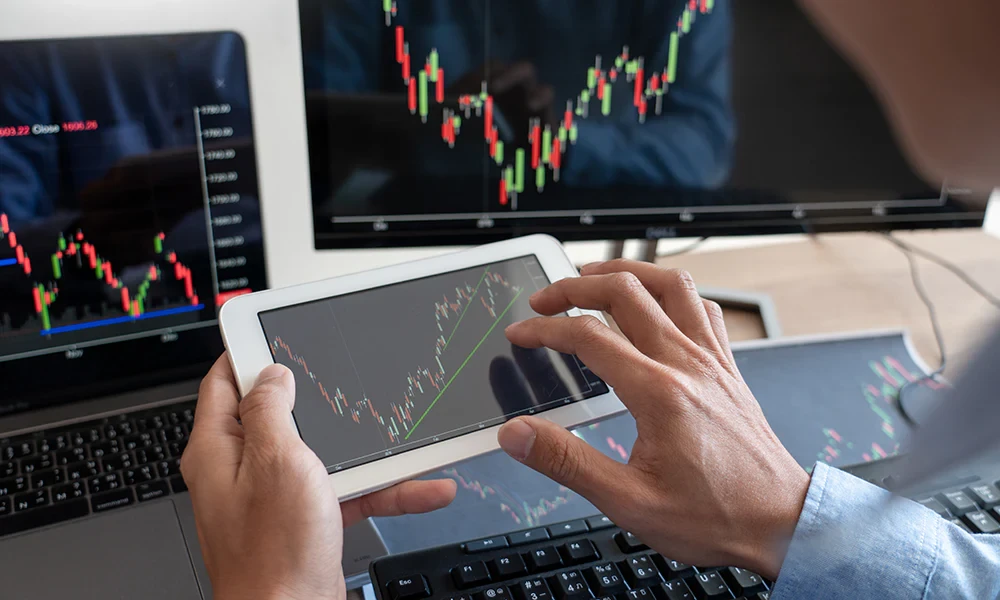
An intraday trading app allows users to buy and sell financial instruments within the same trading session. Unlike long-term investing, intraday trading focuses on short-term price movements and requires positions to be closed before the market session ends, subject to broker and exchange rules.
The app used for this activity can affect how quickly users view prices, place orders, track positions, and respond to market movement. However, speed alone does not make trading safer or more effective. Users also need reliable market data, clear order controls, stable platform performance, and a defined risk plan.
An intraday trading app should therefore be selected based on practical features rather than promotional claims. Traders should understand the platform, charges, order types, and risks before using real money.
What Is an Intraday Trading App
An intraday trading app is a mobile platform that provides access to short-term market trading. It usually connects with a trading and demat account and allows users to monitor securities, place orders, review open positions, and track profit or loss during market hours.
The app may support stocks, indices, derivatives, commodities, or other eligible instruments depending on the broker and account type. Users should check which market segments are activated before placing trades.
Intraday positions are generally opened and closed on the same trading day. If a position remains open near the market closing time, the platform may square it off automatically based on its policy. Traders should understand these rules to avoid unexpected charges or execution.
Why Platform Stability Matters
Intraday traders often make decisions within a short period. A slow or unstable app can delay order placement, position modification, or exit execution. Even a small delay may affect the trade price during volatile market conditions.
A dependable app should provide stable login access, timely price updates, quick order confirmation, and clear position tracking. Users should also have access to a web platform or another approved backup method in case the mobile app faces technical issues.
Platform stability should be tested before active trading. Traders can begin by observing market data, creating watchlists, and placing limited orders instead of immediately taking large positions.
Real-Time Market Data and Watchlists
Real-time market data helps traders monitor price movement, trading volume, bid and ask prices, and daily highs or lows. The app should display this information in a clear format without unnecessary distractions.
Watchlists allow users to track selected securities without searching for them repeatedly. Traders may create separate watchlists for sectors, indices, liquid stocks, or planned setups.
A large watchlist can make decision-making difficult. It is often better to follow a limited number of securities that have sufficient liquidity and clear price movement. This allows the trader to study each setup more carefully.
Charting Tools for Price Analysis
Charts help users study price behaviour over different time intervals. An intraday trading app may provide candlestick charts, line charts, volume indicators, drawing tools, and technical indicators.
Traders commonly review support and resistance zones, trend direction, volume changes, and price patterns. These tools can support analysis, but they cannot guarantee trade outcomes.
Users should avoid adding too many indicators to one chart. Conflicting signals can create confusion and delay decisions. A clear method based on a few understood tools is generally easier to follow than a complex chart setup.
Order Types and Execution Controls
Different order types help traders control how a transaction is placed. A market order aims to execute at the available market price, while a limit order is placed at a chosen price or better.
A stop-loss order may help reduce loss if the market moves against the position. However, execution can still differ during sharp price changes, low liquidity, or market gaps.
Before placing any order, users should check the quantity, price, order type, product type, and transaction direction. A wrong quantity or accidental buy or sell selection can create an immediate financial impact.
Reviewing Other Market Opportunities
Intraday traders may also study broader market events before the session begins. Corporate announcements, index movement, global cues, sector activity, and scheduled economic updates can influence short-term prices.
Some users may separately track Ipo Investment opportunities while using intraday tools, but these activities involve different time horizons and evaluation methods. Short-term trading decisions should not be mixed with application decisions made for newly listed companies.
Keeping separate records for each financial activity can help users understand performance and avoid confusing trading capital with long-term funds.
Risk Management Within the App
Risk management is more important than finding frequent trade opportunities. Traders should decide the maximum amount they are willing to lose on one trade and during one session.
The app should display available funds, used margin, open positions, and unrealised profit or loss clearly. Price alerts and stop-loss features may help users follow their plan, although they do not remove market risk.
Position size should be based on available capital and planned risk. Taking a larger position only to recover an earlier loss can increase the chance of further damage.
Users should also set a daily loss limit. Once that limit is reached, stopping for the day may prevent emotional decisions.
Charges That Affect Intraday Returns
Intraday trading includes more than brokerage. Applicable costs may include exchange transaction charges, taxes, regulatory fees, stamp duty, and other account-related charges.
Frequent trades can increase total costs even when individual charges appear low. Traders should review contract notes and account statements to understand the actual expense of their activity.
A strategy should be assessed after charges, not only on gross profit. Small gains may become losses after repeated costs and unsuccessful trades are included.
Market Liquidity and Trade Selection
Liquidity refers to how easily an instrument can be bought or sold without a major change in price. Highly liquid securities usually have better trading volume and smaller differences between buying and selling prices.
Low-liquidity instruments may show sudden movement, wider spreads, and difficult exits. This can make intraday trading more risky.
Users may also study instruments connected with the Etf Market when comparing liquidity and price behaviour, but every product should be reviewed based on its trading volume, structure, and underlying assets.
Selecting a trade only because its price is moving quickly is not enough. Volume, spread, market depth, and overall conditions should also be checked.
Common Intraday Trading Mistakes
One common mistake is entering a trade without a clear entry, exit, and loss limit. This often leads to decisions based on fear or hope.
Another mistake is overtrading. Easy app access may encourage users to place several trades without strong setups. More trades do not automatically result in better outcomes.
Traders should also avoid averaging a losing position without a defined plan. Adding more quantity can increase exposure when the original view is already incorrect.
Using borrowed money or essential household funds for intraday trading should also be avoided. Market losses can affect financial responsibilities outside the trading account.
Maintaining a Trading Record
A trading journal helps users review their decisions over time. It can include the instrument, entry price, exit price, setup, position size, result, charges, and reason for taking the trade.
Screenshots of charts and order records may also help identify repeated mistakes. Traders can review whether losses came from poor analysis, late entries, large positions, or failure to follow stop-loss rules.
Regular review is more useful than judging performance from one successful or unsuccessful session. A trading method should be assessed across several trades and different market conditions.
Security Checks for Trading Apps
Users should install the app only from an official source. Login credentials, passwords, OTPs, and account PINs should never be shared.
Two-factor authentication, biometric login, transaction alerts, and device controls can improve account safety when accessing the ETF market. Public Wi-Fi should be avoided when accessing ETF market trading accounts or transferring funds.
Users should also review account statements for unknown activity. Any suspicious login, order, or fund movement should be reported immediately through the official support channel.
Conclusion
An intraday trading app can provide real-time data, charts, watchlists, order controls, position tracking, and risk-management features in one place. These tools make market access easier, but they do not protect users from poor decisions or price volatility.
Traders should understand order types, charges, platform rules, liquidity, and position sizing before placing trades. They should also maintain a loss limit, avoid emotional decisions, and review their performance regularly.
A suitable app supports disciplined execution. Successful use depends on preparation, controlled risk, stable technology, and the ability to follow a clearly defined trading plan.
Frequently Asked Questions
What is an intraday trading app?
An intraday trading app is a mobile platform used to place and manage trades that are opened and closed within the same market session.
Which features should an intraday trading app provide?
Useful features include real-time prices, charts, watchlists, multiple order types, position tracking, alerts, fund details, and security controls.
Is intraday trading suitable for beginners?
Beginners can access intraday platforms, but they should first understand market risk, order types, trading charges, and position management.
Can stop-loss orders prevent every loss?
No. Stop-loss orders may help limit risk, but execution can vary during sharp volatility, price gaps, and low-liquidity conditions.
Why should traders maintain a trading journal?
A journal helps users review strategies, identify repeated mistakes, measure results after charges, and improve decision-making over time.
